President William Ruto has defended the proposed Vision 2060 national development framework, dismissing criticism from opposition leaders and urging Kenyans to participate in shaping the country's long-term future.
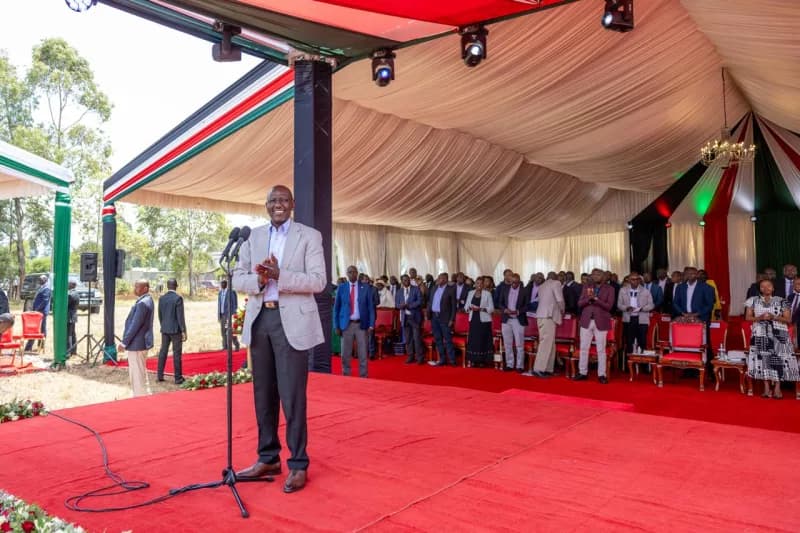
Speaking during a church service at ACK St Stephen's Chepkoilel in Uasin Gishu county on Sunday, the President said the country needed a new development blueprint to succeed Vision 2030.
He argued that Kenya had undergone significant constitutional and institutional changes since the current plan was developed.
"Last week I said we have an opportunity to have a conversation to plan for the country. Mwai Kibaki planned Vision 2030. We must have a vision, and we have enough reasons to have that discussion," Ruto said.
He noted that Vision 2030 was formulated before the promulgation of the 2010 Constitution, saying it was now time to align the country's development agenda with the constitutional order.
"Vision 2030 was developed before we had a new Constitution. Now we have a new Constitution. We have operationalised all sections of the Constitution. Now we must operationalise the development chapter, and it cannot be done in darkness. People must come out and give their views," he said.
The President called on leaders and citizens alike to take part in the national conversation, saying the goal was to build a prosperous country that lifts millions of Kenyans out of poverty.
"I want to encourage all of us as leaders, as citizens, it is time as a nation to agree on where Kenyans must be in this generation. We cannot be a country where the majority lives in poverty. We must make sure Kenya becomes a wealthy and prosperous nation," he said.
Ruto also appeared to take a swipe at critics who have opposed some of his flagship programmes, including affordable housing and universal health coverage.
"There are leaders who have problems with me because I want to build affordable houses to get people out of slums and provide universal health coverage. The Constitution does not envisage a poor country," he said.
The Head of State questioned why anyone would oppose a national dialogue on Kenya's future.
"There are people who think Kenyans should remain poor. The Constitution envisages a democratic and wealthy nation. So I ask myself, why does anybody have a problem with us sitting together as a nation?" he posed.
Insisting that the proposed Vision 2060 process was not politically motivated, Ruto said it would focus on the country's future rather than the next General Election.
"If you do not have a vision, millions of Kenyans have. It is not going to be a conversation about leaders, political parties or 2027, but the future of the country, and we will put it in law. The 2027 elections will come, but for now let us plan how the country will move forward," he said.
The President announced that public consultations on Vision
2060 would begin on August 12.
"The conversation starts on August 12. Everybody with ideas and plans will have an opportunity to share," he said.
Interior Cabinet Secretary Kipchumba Murkomen, First Lady Rachel Ruto, Uasin Gishu Governor Jonathan Bii, Senator Jackson Mandago, Keiyo North MP Adams Kipsanai and Nandi Woman Representative Cynthia Muge attended the church service, among other leaders.
The proposed Vision 2060 has attracted criticism from sections of the opposition.
Wiper leader Kalonzo Musyoka has questioned the need for a new long-term blueprint before the full implementation of Vision 2030, arguing that the government's priority should be delivering on existing commitments.
People's Liberation Party (PLP) leader Martha Karua has similarly argued that the government should focus on addressing immediate governance and economic challenges before launching another decades-long development agenda.
Other opposition leaders have described Vision 2060 as a distraction from pressing issues facing Kenyans, including the high cost of living, unemployment, healthcare funding and taxation.